2026 Best Optical Lens Types for Buyers?

Time:2026-11-11 Author:Charlotte
0%

Choosing the right Optical Lens is not just a matter of picking the most expensive option. Buyers must match lens design, material, and coating to their prescription, daily routine, and budget. A person reading under warm desk lighting may have different needs from a driver facing bright headlights or a child who plays outdoors. The details matter.

This guide compares common choices, including single-vision, bifocal, progressive, and photochromic lenses. It also explains how high-index materials, scratch-resistant coatings, and anti-reflective treatments can affect comfort and upkeep. These features are not automatically useful for everyone. A coating may reduce distracting reflections, for example, but it cannot correct an unsuitable prescription or guarantee perfect vision. It depends.

Prescription strength, frame size, and lens thickness can influence which options are practical. Ask an eye-care professional to explain trade-offs using your prescription and intended use. Product descriptions can sound clear while hiding important differences. I admit, even familiar terms can be confusing when sellers use them inconsistently. So compare specifications carefully, and confirm what is included in the quoted price.

There is no universal winner. A sensible choice balances clear vision, comfort, durability, and cost, rather than chasing one headline feature. This overview offers a starting point, not a diagnosis or a substitute for professional advice. Before buying, consider how your glasses will feel after a full workday, not just how they look at the counter.
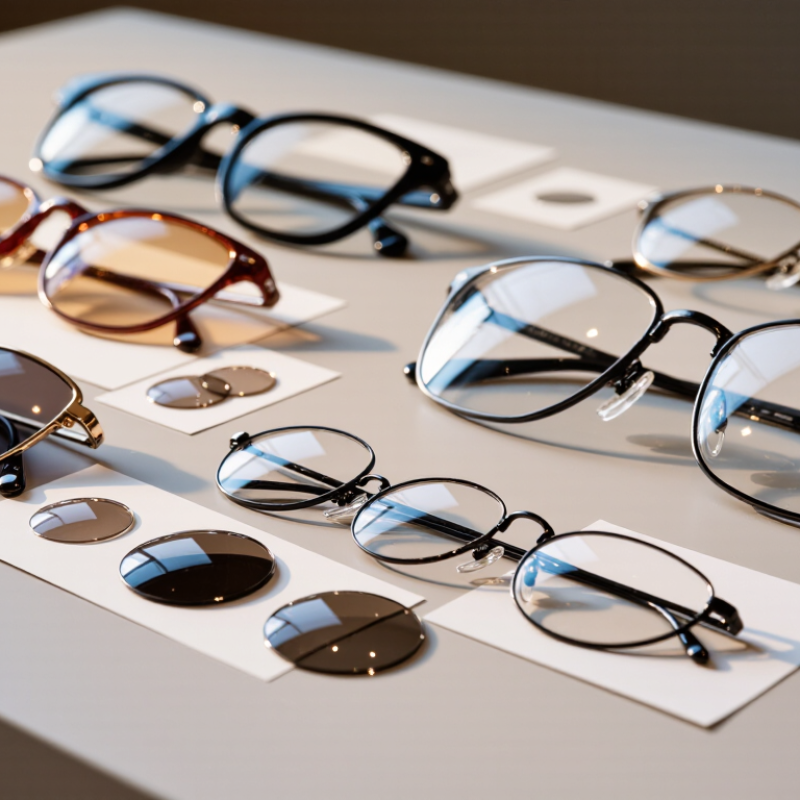
2026 Best Optical Lens Types for Buyers?

What Optical Lenses Are and How They Work

An optical lens is a shaped piece of transparent material that redirects light. Most lenses do this through refraction: light changes direction as it passes between materials, such as air and glass. The lens’s curved surfaces and thickness influence where the light rays meet. A convex lens brings rays together, while a concave lens spreads them apart. Small details matter.

In eyeglasses, this change helps focus light onto the retina, the light-sensitive tissue at the back of the eye. In a camera, lens elements guide light toward a sensor to form an image. A lens may contain several elements because one curved surface rarely controls every optical effect well. Some designs reduce blur or color fringing, though no lens is perfect across every viewing condition. That part is easy to oversimplify.

Material also affects a lens’s weight, clarity, and resistance to scratches. Surface coatings can reduce reflections, but they do not change the basic job of bending light. Buyers should consider how and where a lens will be used, along with its prescription or optical specifications. For prescription eyewear, an eye-care professional can help match lens power and fit to individual needs. A neat-looking specification sheet may still leave questions. Ask how the lens performs in everyday lighting.

Main Optical Lens Types Available to Buyers in 2026

Main Optical Lens Types Available to Buyers in 2026

Optical lens choice starts with the viewing distance you need to correct. Single-vision lenses provide one prescription across the lens, often for distance or reading. They suit many straightforward prescriptions. Bifocals combine two viewing zones, usually divided by a visible line. Trifocals add an intermediate zone, which can help with tasks such as reading a dashboard. Progressive lenses blend distance, intermediate, and near correction without a dividing line. Their usable zones vary by design, and some wearers need time to adjust.

There are more options. Occupational lenses prioritize near and intermediate vision, such as reading a monitor and papers on a desk. They are not always suitable for driving. Photochromic lenses darken in response to ultraviolet light, but car windows can limit that change. Polarized lenses reduce reflected glare, especially around water or bright roads, though they may make some digital displays harder to read. Lens materials also matter: high-index options can be thinner for stronger prescriptions, while polycarbonate is lightweight and impact resistant. Coatings may reduce reflections or help lenses resist scratches, but no coating makes a lens scratch-proof. A useful comparison includes prescription, frame size, work habits, and comfort—not just price. Honestly, the widest feature list may not be the best fit. Ask an optician to verify measurements and explain trade-offs for your prescription.

Lens Materials, Coatings, and Key Performance Differences

For buyers comparing optical lens types in 2026, material affects weight, impact resistance, thickness, and clarity—not just price. Standard plastic, often called CR-39, can provide clear optics at moderate prescriptions, but may look thicker at stronger powers. Polycarbonate is light and impact-resistant, making it a practical option for children and active use. Some wearers may notice more color fringing than with other materials. Trivex is also lightweight and impact-resistant, and often offers sharper optics than polycarbonate, though cost and availability vary. High-index plastic can reduce edge thickness for stronger prescriptions. Not automatically the best choice. Prescription strength, lens design, and frame size all matter. Glass offers excellent scratch resistance and clarity, but its weight and breakage risk may not suit every wearer.

Coatings change everyday comfort. Anti-reflective treatment reduces reflections from screens and headlights, while a hard coat helps resist routine scuffs. Neither makes lenses scratch-proof. UV protection should be confirmed for the finished lens, especially with clear lenses. Hydrophobic and oleophobic topcoats help water and fingerprints wipe away more easily. Small help. One detail buyers can overlook is care: heat, rough cloths, and unsuitable cleaners may damage coatings. Ask an eye-care professional which cleaning method fits the lens. Compare material and coatings together, and request a thickness estimate for your prescription and chosen frame.

How to Match Lens Types to Viewing Needs and Use Cases

Matching lens types to viewing needs begins with the distances you use most. Single-vision lenses correct one viewing range, such as reading or driving. They can suit a clear, specific task. If you switch often between a dashboard and road signs, however, one pair may feel limiting.

Bifocal lenses provide two distinct viewing zones, while progressive lenses blend distance, intermediate, and near prescriptions. Progressives may help when checking a phone, computer screen, and distant view throughout the day. The transition takes practice. Some wearers need time to find the right head position, especially on stairs. Fit matters.

For desk work, occupational lenses can make a wide screen area easier to see while keeping nearby documents in focus. They are not usually designed for clear distance vision, so they may not suit driving. Photochromic lenses darken outdoors, but the change can be limited inside a car. Polarized lenses reduce reflected glare near water or on bright roads, though some digital displays may look dimmer. Ask an eye-care professional to consider your prescription, frame fit, work distance, and daily routine. A small detail matters: measure the screen from your usual seated position, not from across the room. My own first assumption was that “computer lenses” meant one standard design; it does not.

2026 Best Optical Lens Types for Buyers? - How to Match Lens Types to Viewing Needs and Use Cases

Lens Type Best Matched Viewing Need Typical Use Cases Key Benefits Important Considerations
Single-vision lenses One primary viewing distance: near, intermediate, or distance Everyday distance glasses, reading glasses, or task-specific computer glasses Provide one consistent prescription across the lens; straightforward to select for a specific task A single-vision pair generally does not provide multiple prescription zones for both near and far viewing.
Bifocal lenses People who need separate distance and near prescriptions Switching between looking across a room and reading Offer two distinct prescription areas in one lens, typically separated by a visible segment line The visible boundary and abrupt change between zones may take adjustment; there is usually no dedicated intermediate zone.
Progressive lenses People who need distance, intermediate, and near correction without a visible segment line General-purpose eyewear for distance viewing, dashboard or computer use, and reading Provide a gradual transition between prescription zones in a line-free design Peripheral distortion can occur, and wearers may need time to adapt and learn to use the appropriate viewing areas.
Aspheric lenses Buyers seeking a flatter, less bulging lens profile for some prescriptions Everyday prescription eyewear, including some higher-prescription designs The lens surface design can reduce magnification or minification effects and may create a slimmer appearance Results depend on prescription, frame, material, and lens design; “aspheric” describes a surface design, not a prescription type.
High-index lenses People with stronger prescriptions who want thinner lenses than standard plastic may provide Prescription glasses where lens thickness or weight is a concern Higher refractive-index materials can bend light more efficiently, allowing a thinner lens for a comparable prescription and design Material and prescription affect the final result. Some high-index lenses reflect more light, so an anti-reflective coating may be worth considering.
Polycarbonate lenses Situations where impact resistance and light weight are priorities Children’s eyewear, sports eyewear, and safety eyewear when the lens and frame meet the relevant requirements Lightweight and impact-resistant; the material provides UV protection Impact-resistant does not mean unbreakable. Polycarbonate can show more color fringing than some other materials, and safety needs require appropriately rated eyewear.
Photochromic lenses Wearers who want lenses that darken outdoors and become clearer indoors Daily use across changing indoor and outdoor light conditions Automatically adjust tint in response to UV and, depending on the lens, visible light Darkening and clearing speed vary by product, temperature, and light conditions. Many photochromic lenses darken less inside a car because windshields block much of the UV light.
Polarized lenses Reducing reflected glare from flat surfaces Driving in bright conditions, boating, fishing, and outdoor activities near water or roads Polarizing filters reduce much of the glare reflected from surfaces such as water and pavement They do not replace UV protection; check the lens’s UV rating. Polarization can make some digital screens or instrument displays harder to see.
Plano (non-prescription) lenses People who do not need vision correction but want a particular lens feature Non-prescription sunglasses or clear protective eyewear Can be made with features such as tint, polarization, or impact-resistant materials without corrective power Plano means no prescription power; it does not by itself indicate UV protection, impact protection, or safety certification.

Buyer tip: Choose the prescription and viewing zones first, then compare material, coatings, tint, and frame compatibility. An eye-care professional can help confirm the prescription and lens design for your intended use.

How Buyers Can Compare Cost, Compatibility, and Durability

Buyers comparing optical lens types should weigh prescription strength, frame design, daily use, and total cost. CR-39 can suit standard prescriptions and tighter budgets. High-index plastic may make stronger prescriptions look thinner, while polycarbonate and Trivex are lightweight options for active routines. Compatibility matters. Ask the optician to check frame shape, minimum lens thickness, and prescription limits before ordering. The World Health Organization’s 2019 World Report on Vision estimated that at least 2.2 billion people worldwide have near or distance vision impairment. That figure reinforces the value of accurate correction, but it does not mean one lens material suits everyone.

Compare itemized quotes, including coatings, edging, and replacement terms. Then ask what durability claims actually cover. In the United States, FDA regulation 21 CFR 801.410 requires spectacle lenses to pass an impact test: a 5/8-inch steel ball is dropped from 50 inches. This is a baseline test, not a guarantee against every real-world impact. A comparison chart can make material choices look simple; in practice, fit and handling matter too. A lens that seems cheaper upfront may not be the best value if it is poorly matched to the frame or routine. Check the prescription and final fitting before deciding.

2026 Best Optical Lens Types for Buyers: Cost, Compatibility & Durability

Typical refractive index and Abbe number values for common spectacle lens materials. Values are approximate and can vary by product.

How to compare: A higher refractive index can make lenses thinner for stronger prescriptions, but these materials typically cost more than CR-39. CR-39 offers a relatively high Abbe number, associated with less chromatic dispersion. Polycarbonate and Trivex are impact-resistant options often considered for children, sports, and rimless frames; scratch resistance depends largely on coatings. Confirm frame and prescription compatibility with an optical professional.

FAQS

How does an optical lens redirect light?

Its curved surfaces bend light as it passes through materials such as air and glass. Convex lenses bring rays together; concave lenses spread them apart. Small details matter.

What is the difference between single-vision and progressive lenses?

Single-vision lenses provide one prescription across the lens. Progressive lenses blend distance, intermediate, and near correction without a visible dividing line. Adjustment can take time.

When might occupational lenses be useful?

They prioritize near and intermediate vision, such as reading a monitor and papers on a desk. They are not always suitable for driving.

Do photochromic lenses darken equally indoors and outdoors?

They darken in response to ultraviolet light. Car windows can limit the change, so they may stay lighter during a drive.

What should I know about polarized lenses?

They reduce reflected glare, especially near water or on bright roads. Some digital displays may become harder to read.

Which lens material may suit a stronger prescription?

High-index plastic can reduce edge thickness. Frame size and lens design also matter, so request a thickness estimate. Not automatically the best choice.

Do coatings make lenses scratch-proof?

No. Anti-reflective treatments reduce reflections, while hard coats help resist routine scuffs. Neither prevents every scratch.

How can I help protect lens coatings during cleaning?

Heat, rough cloths, and unsuitable cleaners may damage coatings. Ask an eye-care professional which cleaning method suits your lenses. Small help.

Conclusion

Choosing the right Optical Lens in 2026 starts with understanding how lenses bend and focus light to produce a clear image. Buyers can compare common lens types by their design and intended function, then consider how each option suits everyday viewing, photography, imaging equipment, or other specific needs. The best choice depends not only on the lens type, but also on how it will be used and what level of performance is required.

Materials and coatings can affect clarity, weight, durability, and resistance to reflections or surface wear. Before purchasing, compare these characteristics alongside cost and compatibility with the intended device or optical system. Check dimensions, mounting requirements, and operating conditions, and consider whether the lens can withstand frequent handling or environmental exposure. A balanced comparison helps buyers select a practical lens that meets their viewing needs without paying for features they are unlikely to use.

Charlotte

Charlotte

Charlotte is a seasoned marketing professional with a deep understanding of the company's portfolio and a passion for elevating its presence in the market. With a keen eye for detail and a commitment to excellence, she ensures that our professional blog is regularly updated with insightful articles......